

Sports tech
Supreme Golf
Building a $1M product for $125K with a non-technical CEO at the keyboard
Read the case studyPhoto by todd kent on Unsplash
Devin is the most famous AI software engineer in the world, and the numbers behind it are not hype. In May 2026, Cognition — the company that makes Devin — raised over $1 billion at a $25 billion pre-money valuation, with an annualized revenue run rate reported at $492 million. The results some customers report are real too: Cognition's own Nubank case study reports a 12x engineering efficiency gain on a massive ETL migration.
So before anything else, let's kill the genre convention where the vendor writing the comparison pretends to be neutral. We are not neutral. Streaver sells Managed Agentic Delivery — MAD — a service that competes for the same line in your budget. You deserve to know that before you read another word.
Here's why we're writing this anyway. Over months of conversations about agentic delivery, we keep meeting the same person: a founder or operator who knows exactly what their product needs next, saw a demo of an "AI software engineer," and is now wondering whether that replaces hiring developers. And when they search for guidance, every "Devin alternatives" article hands them a list of more tools — Cursor, Replit, Claude Code, OpenHands — as if the choice were between brands of the same thing.
It isn't. The real choice is between two different deals. Depending on which side of it you're standing on, Devin is either a great buy — or an expensive way to discover you've just given yourself a second job.
Devin is an AI agent that works like a remote software engineer. You hand it a task, it works in its own cloud environment — reading your codebase, writing code, running tests — and it comes back with a pull request for a human to review. At the high end, you don't run one: Cognition's pitch is to "assign a fleet of agents to migrate all repos in parallel," watched from a command center, and the product claims it "learns your codebase and picks up tribal knowledge" as it goes.
Its sweet spot is high-volume, well-defined engineering work: framework migrations, dependency upgrades, expanding test coverage, batch bug fixes across many repositories. If you're an engineering organization staring at four hundred repos that all need the same change, a fleet of Devins may be some of the best money you can spend. That's the customer the Nubank numbers come from, and nothing in the rest of this post disputes any of it.
The question is what happens when the buyer isn't an engineering organization.
Cognition's documentation is refreshingly honest about how to succeed with Devin, and it's worth reading closely, because it quietly describes a job.
The guidance on task size: "if a task would take you three hours or less, Devin can most likely do it." Bigger projects? "Break them into smaller sessions" — or more precisely, "split tasks into verifiable sub-tasks, and start one Devin session for each sub-task." On instructions: "be as specific as possible" — by Cognition's own telling, an agent without a clear path gets stuck. The best results come from tasks with "explicit success criteria (e.g., passing tests, matching an existing pattern, CI green)," and "tasks with test suites, lint checks, or compilation steps yield better results."
That is good, truthful advice. Now read it again as a job description:
In most companies, that job has a title — engineering manager, or tech lead. Which leads to the one-line summary of everything above:
Devin works when someone competent is managing it. Buy the tool, and that someone is you.
If you have that person, wonderful — you're the intended customer, and the tool will likely earn its keep. If you're a founder or operator without one, look closely at what you're actually buying: the world's fastest junior engineer, plus a quiet promotion for yourself into engineering management.
To be clear, this isn't a flaw in Devin. It's a division of labor, and it's the same division every tool in those alternatives listicles offers. Cursor, Claude Code, Replit, OpenHands — all excellent, all the same deal: a powerful engine, where you do the driving and the quality control.
There's a second structural difference between the deals, and it lives in the pricing.
As of August 2026, Devin's individual plans run from free to $20/month (Pro) to $200/month (Max); Teams is $80/month plus $40 per developer seat. At the enterprise tier, per Cognition's billing docs, customers "are billed in Agent Compute Units (ACUs) at the rate set in their order form" — a meter on the resources the agent consumes while it works.
There's nothing dishonest about usage-based pricing. But notice carefully what the meter measures: activity, not outcome. A meter cannot tell the difference between an hour of real progress and an hour of an agent confidently iterating down the wrong path. Cognition's docs warn that under-specified tasks are where agents get stuck — but a failed attempt is metered exactly like a successful one. The vendor's revenue grows with consumption, whether or not that consumption shipped anything. That's not malice; it's just structure. Structure is enough to matter.
Now flip the incentive. Under MAD's terms, the workflow itself is a flat monthly plan, and the AI usage — we call it the fuel — is bought by you, in your own provider accounts, at list price, with zero markup. As our own page puts it: "Our job is to make the car efficient, not thirsty." When an agent wastes tokens under a flat plan, that's the vendor's problem to engineer away, and every efficiency gain lands in your pocket, not ours.
So here's a question worth asking any agentic delivery vendor, us included: when the agent wastes a day, whose money did it spend? The answer tells you whose side the meter is on.
What we sell with Managed Agentic Delivery is not a smarter agent. It's the other half of the job — the half the manual assigns to you.
We put our agentic delivery pipeline on your codebase and operate it. You keep a prioritized list of what you want built, and every item on it runs the same gauntlet:
Behind all of it is a named senior Streaver engineer — the mechanic — who keeps the workflow tuned to your codebase and is guaranteed available to you, up to two hours a day, for anything from judgment calls to code review. That capacity is held open whether you use it or not, and billed only when you do — the flat monthly plan covers the operated workflow, not a bundle of hidden hours. Either way, defects in accepted work are fixed free for 30 days.
At the end of the month you get a delivery statement generated from your own ticket tracker: every change shipped, each row linked to the plan you approved and the pull request that closed it. Your repo, your tracker, your cloud, your AI keys — everything runs in your accounts, so if you cancel (it's month-to-month), you keep all of it. And the methodology isn't a leap of faith: it's the same agentic delivery muscle behind our work with Supreme Golf — AI-augmented stack, guardrails, daily production deploys.
The difference in one line: Devin sells you capability. MAD sells you accountability. With the tool, quality is a problem you own alone, in whatever time you can spare for it. With the service, there's a name on the garage door: an engineer who owns how the workflow behaves on your codebase, reviews what you've agreed deserves human eyes, and answers for the result.
Two honest caveats, because candor is the product here too.
First, we can't promise the car drives itself — nobody honestly can, and as we say on the MAD page: everyone in this market is selling autonomous magic, and we're not. You still decide what gets built, read the plans, and look at the previews. That's a few minutes of attention per change — driving, not managing. The line between the two is exactly what you're paying for.
Second, MAD is deliberately new. It starts with a two-week paid fit check on one real goal in your codebase, and sometimes the honest verdict is "not yet" — in which case we'll say so and part friends. And there's no published price sheet today: MAD is a single flat offer being calibrated with design partners against real delivery data. If that vagueness bothers you, fair enough — ask us, and we'll tell you exactly where the calibration stands.
We asked Agustín Tornielli, the principal engineer behind our delivery workflow, what actually separates it from Devin — and his first answer was a disclaimer worthy of this post: he hasn't used Devin himself. So read what follows for what it is — the design choices of our machine, from the person who builds it, with Devin's side taken from its public docs.
The process bends to your team, not the other way around. "The most important thing is the flexibility to define the development process so it follows the team's own process — not something generic and limited, running in someone else's cloud." A cloud agent ships one way of working for everyone; during onboarding, our workflow gets tuned to your codebase, your conventions, your definition of done.
The agent debugs for free before anything ships. "We give the agent every tool it needs to debug locally on its own — it can replicate the environment N times and test the functionality in isolation without spending a dollar." Remember the meter question from earlier? This is what the answer looks like in the architecture: iteration happens on hardware you own, not on metered credits, so the workflow can afford to be thorough — running the app the way a developer would, mobile builds included — before anything touches CI.
Parallelism is bounded by hardware. The workflow can replicate your environment as many times as the machine allows and run the copies side by side — the only ceiling is the hardware it runs on.
Access is inherited, not granted. Devin connects through a GitHub App you install on your organization. Our setup runs under the permissions of the user driving it — it can't touch anything you couldn't already touch yourself.
The playbooks are a service, not homework. Any agent is only as good as its operating instructions. With a tool, writing and maintaining those playbooks is your job. "In ours, we define them — and improve them over time." That's the mechanism behind a promise we make on the MAD page: the car you get in week one is the slowest it will ever be.
The honest sorting, with no thumb on the scale:
Choose Devin — or Cursor, or Claude Code — if:
Choose Managed Agentic Delivery if:
Both answers can be true for the same company at different times. Some MAD clients will eventually build an engineering team and adopt tools like Devin — we'd call that graduation, not betrayal. It's the same reasoning we laid out in Team Expansion vs. staff augmentation: the question is never which brand to buy, it's which deal your company actually needs — a tool that adds capability, or a partner that owns an outcome with you.
Devin — The AI Software Engineer: Cognition, Devin pricing: Cognition, Customers — Nubank: Cognition, When to use Devin: Devin Docs, Instructing Devin Effectively: Devin Docs, Billing — Agent Compute Units (ACUs): Devin Docs, GitHub integration: Devin Docs, AI coding startup Cognition raises $1B at $25B pre-money valuation: TechCrunch
If you have an engineering organization, Devin deserves its reputation: point it at a well-scoped backlog, manage it well, and it will likely pay for itself. If you don't — if you're the founder or operator who knows what to build and just wants it shipped — then buying an AI software engineer means becoming an AI software engineering manager, billed by the time the agent works rather than by what actually ships.
The honest Devin AI alternative was never another tool with the same gap. It's a different deal entirely: rent the operated workflow, keep everything in your own accounts, and put a named senior engineer on the hook for how it behaves — with the amount of human review decided with you, out loud, before you start. That's Managed Agentic Delivery.
MAD is currently onboarding a handful of design partners on founder terms. It starts with a two-week fit check on one real goal in your codebase — and an honest recommendation at the end, even if that recommendation is "not yet."
Contact us and ask about a design-partner seat.
Building a $1M product for $125K with a non-technical CEO at the keyboard
Read the case study
570+ podcast episodes turned into instant, cited answers
Read the case study
First paying enterprise customers in fourteen weeks
Read the case study
Out of Claude Code credits by 11 AM? How one developer split the work across Haiku, Sonnet and Opus subagents and stopped hitting the usage limit.
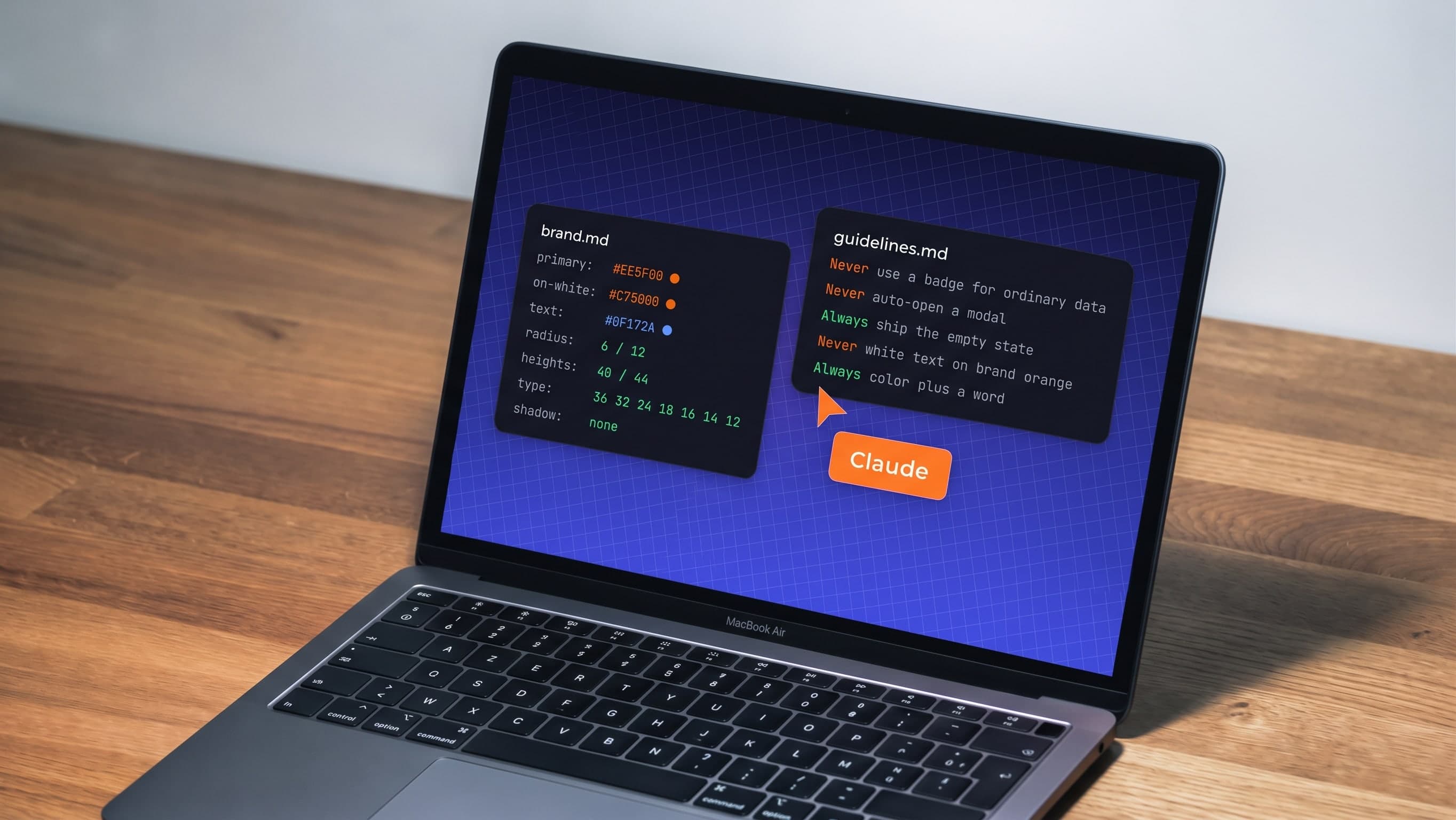
AI-built products drift: new greys, new sizes, new modals on every screen. How a designer wrote the rules, tokens and checks that keep AI on-brand.

How a developer automated his daily planning with a scheduled AI agent: no code, just a document, a schedule and one prompt. Rules, examples and costs.
Streaver embeds senior product teams inside companies building AI-native software, from whiteboard to live customers.
Talk to us