


Podcast
Swisspreneur
570+ podcast episodes turned into instant, cited answers
Read the case studyBuilt for Fundación Niños sin Dolor in Montevideo, so families can follow each stage of their child's surgery.
Fundación Niños sin Dolor (Children Without Pain Foundation) is a Uruguayan nonprofit started by a group of pediatric anesthesiologists. It works so that every newborn and child who needs surgery gets the best anesthesia care possible: modern equipment, a team trained in Uruguay and abroad, and a better experience for the families who wait.
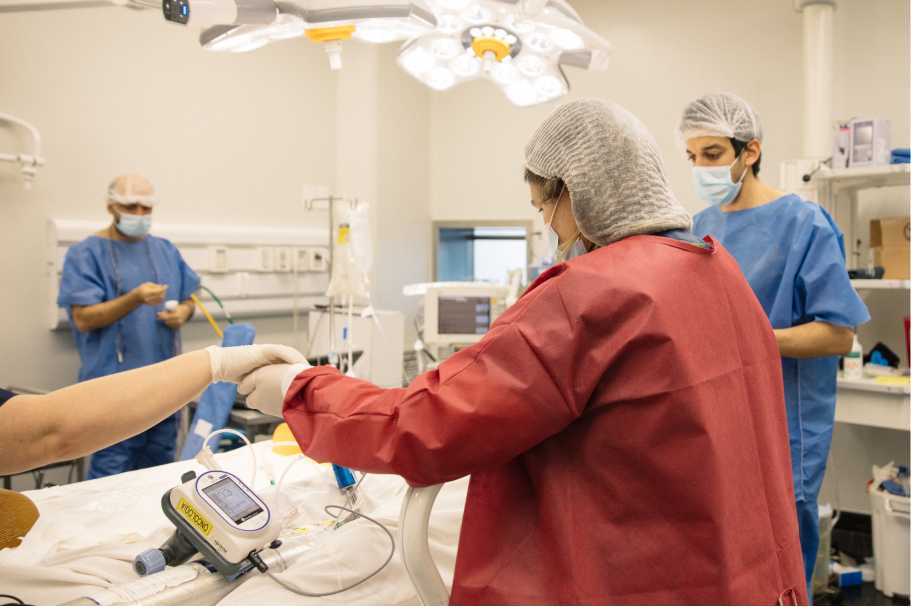
The foundation is its own organization, not part of the hospital. It supports the Centro Hospitalario Pereira Rossell, the public pediatric hospital in Montevideo where its founders work, and its biggest project today is renovating the waiting room outside the operating rooms into a welcoming, comfortable place.
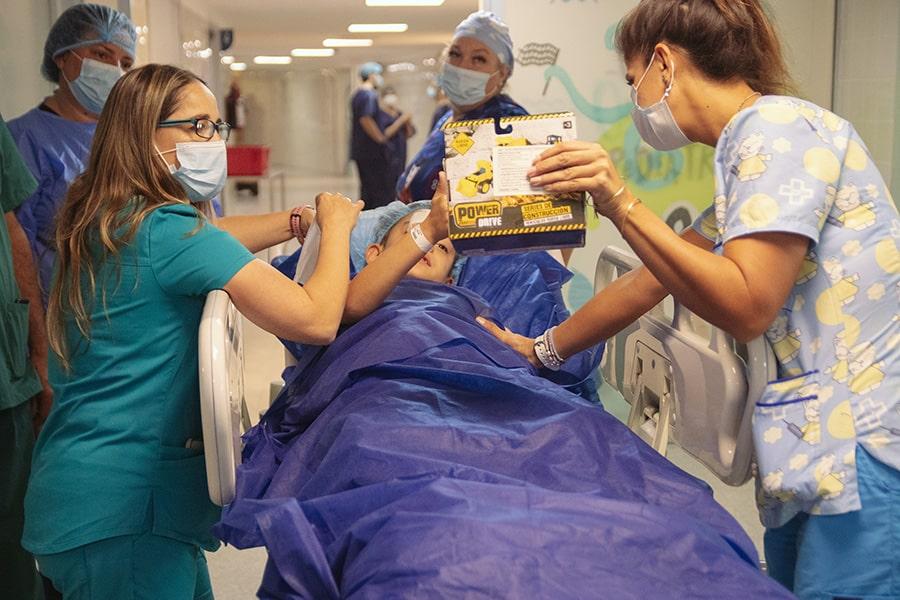
We met the foundation through its treasurer, who also works at the accounting firm Streaver relies on. Larry and Fede, Streaver's founders, started backing its activities in 2023. Nico and Yully joined later, and Yully, a regular at the donation drives, got to know the waiting rooms firsthand.
Before any app came the toy drives for the children staying at the Pereira Rossell, at Christmas and Three Kings' Day in 2025 and on Children's Day in 2026, and Fede moved the foundation's email and DNS.
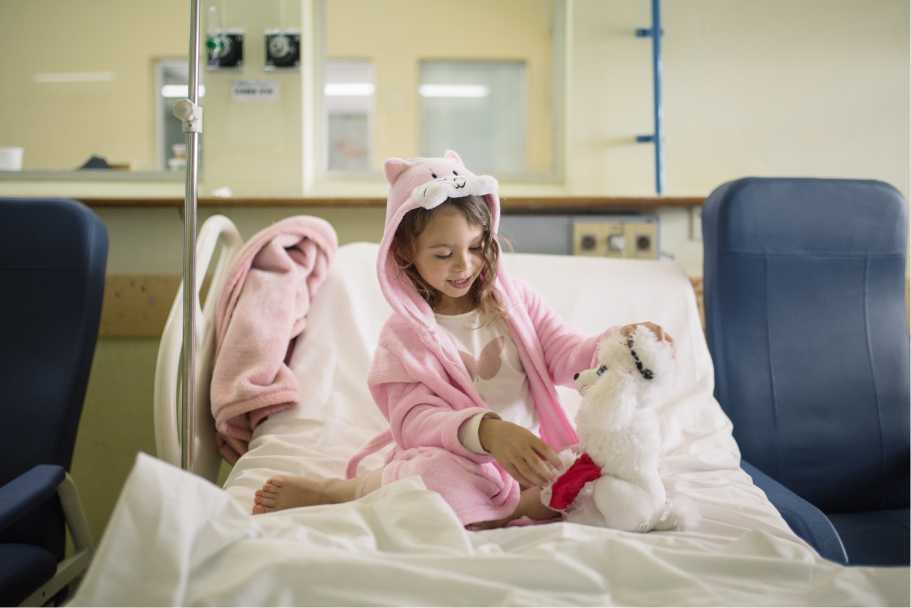
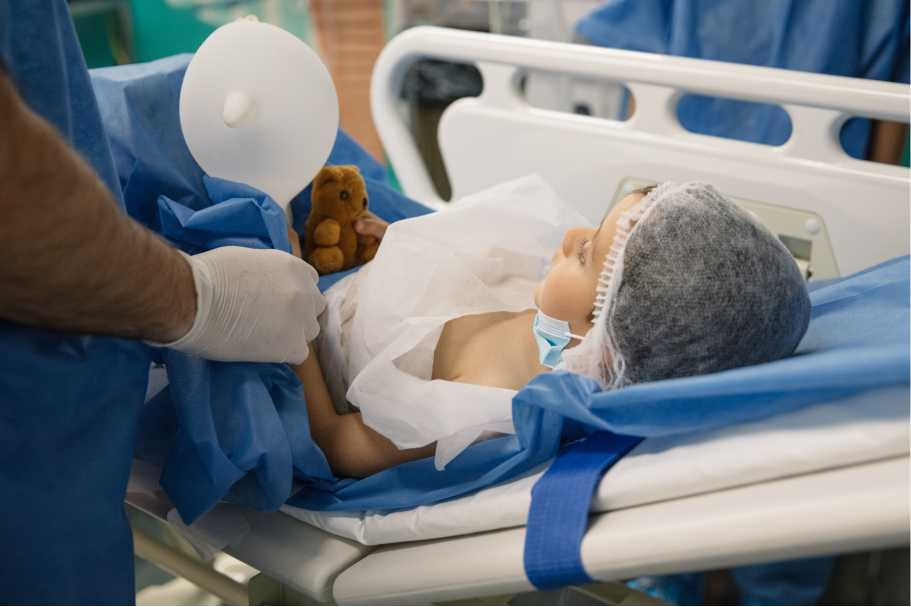
Surgery days are busy, and the team in the operating room cannot always step out to the waiting room. Parents often hear at the start and at the end of the surgery, and wait in between.
The foundation shared the idea on our August visit, Fede put it forward for Streaver's hackathon on September 18, and the first complete version came out that same night. With it, whoever is with the child marks the stage, and the TV in the waiting room shows it within seconds.
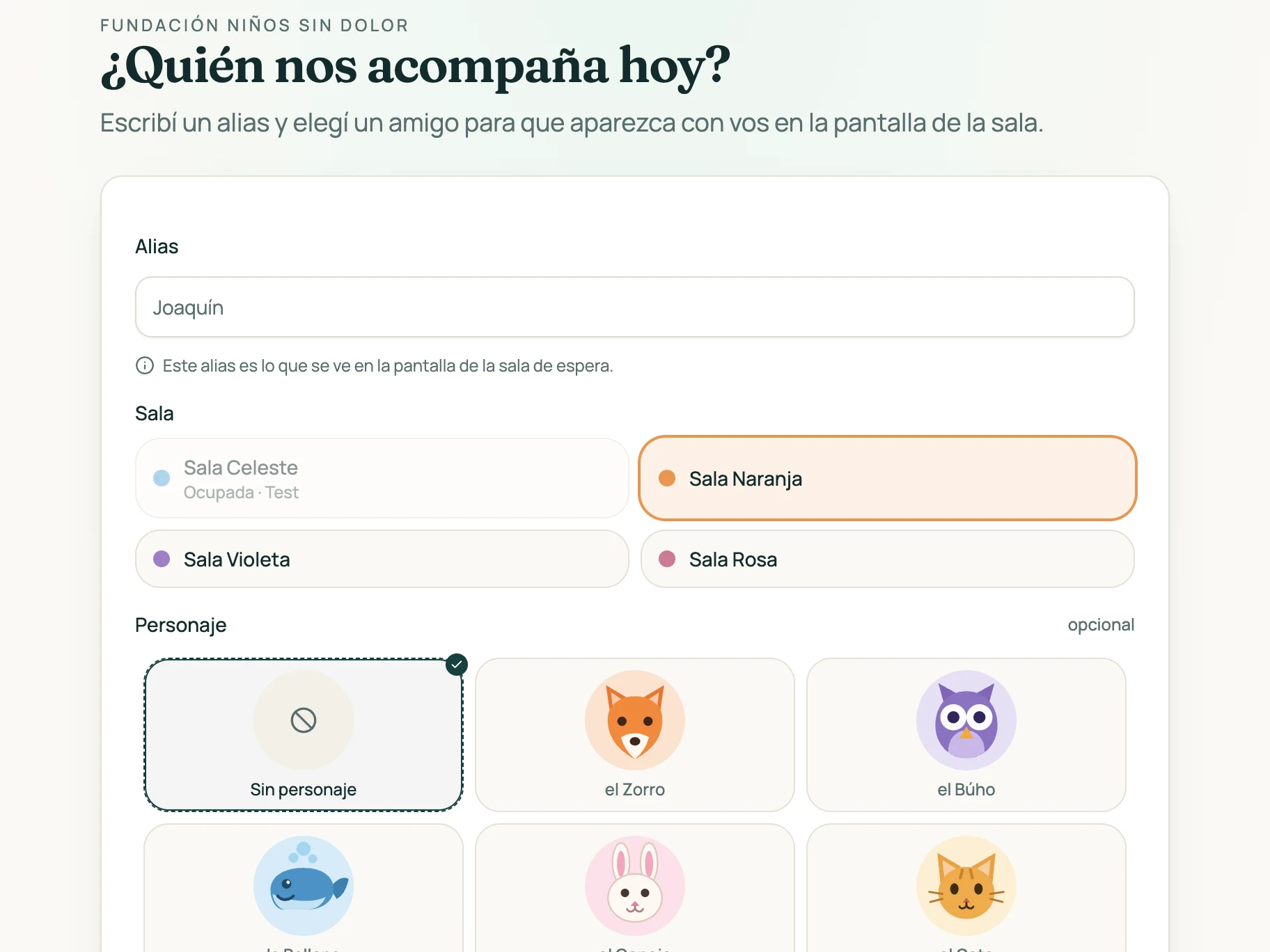
The child helps the anesthesiologist sign them in and picks a character from 32 animals: the Fox, the Giraffe, the Dinosaur and more. The animal keeps them company on the waiting room screen.
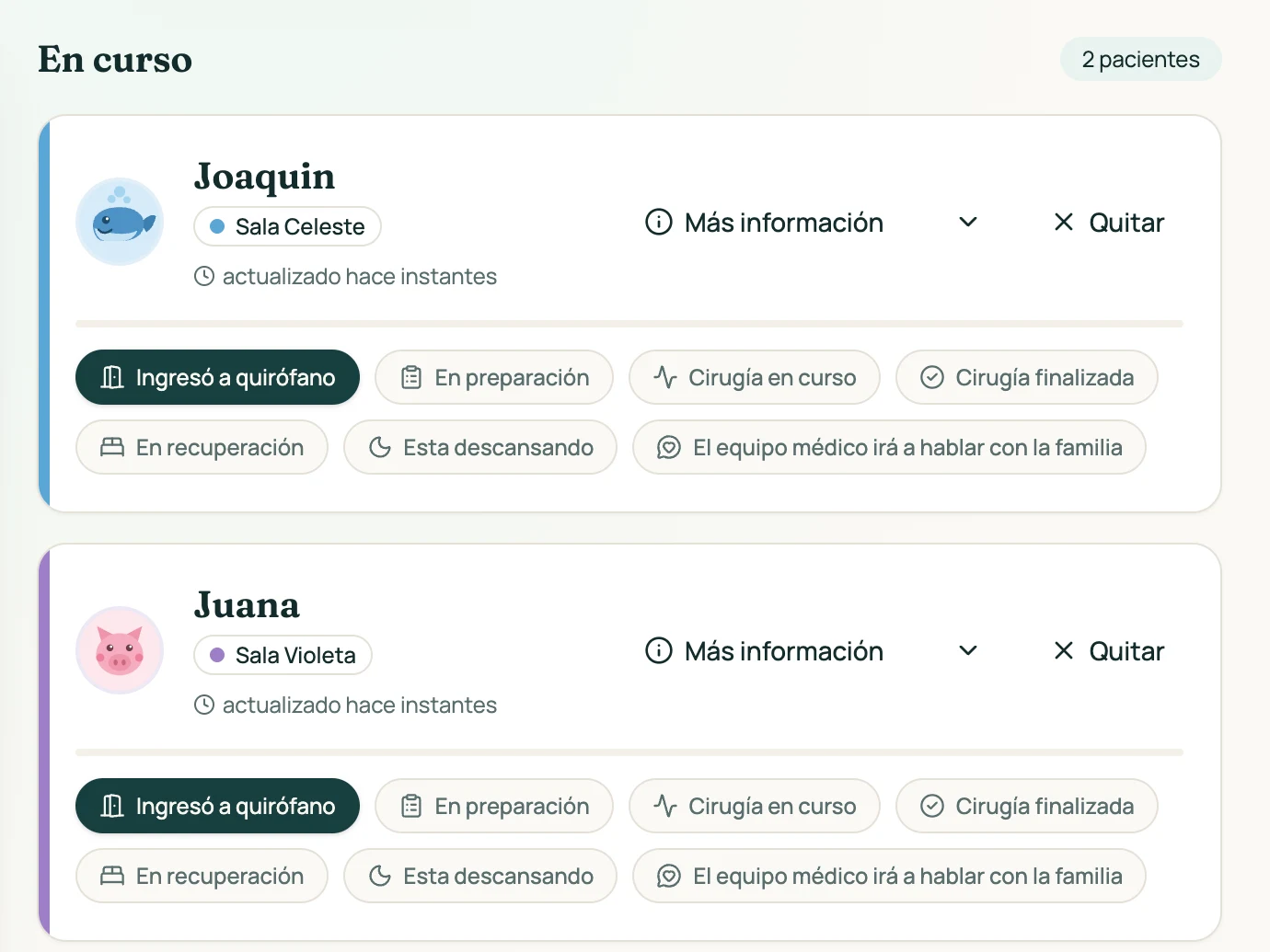
One button for each stage. Every change asks for confirmation, so an accidental tap never reaches a family.
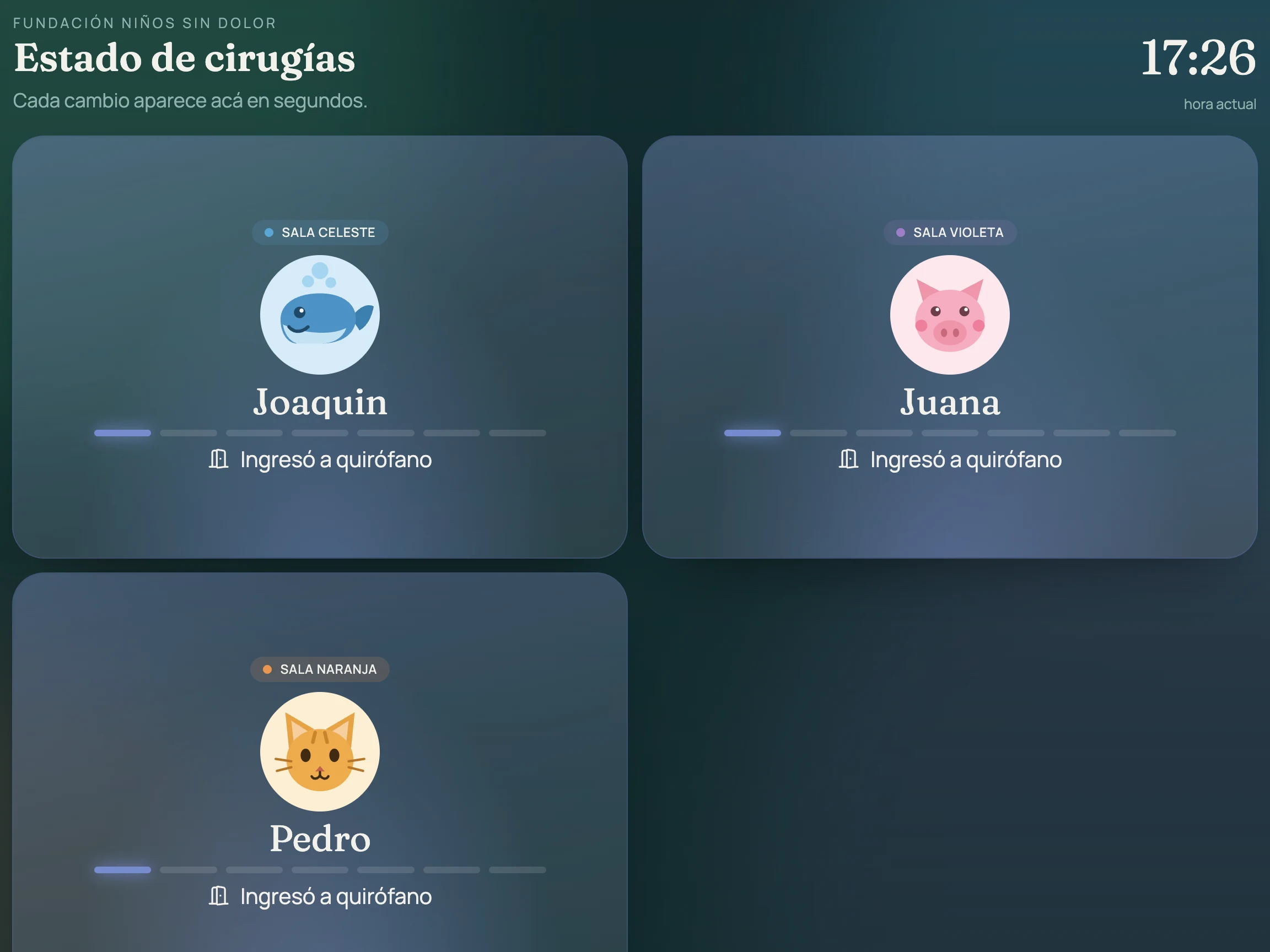
The TV shows one card per child: the room (by color), an alias, the animal and the stage, with a progress bar. Every change gets a big notice, and the last stage lights the card up: it is the call for the family.
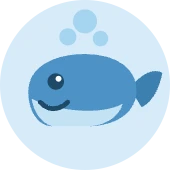
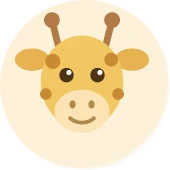
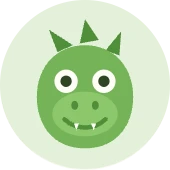
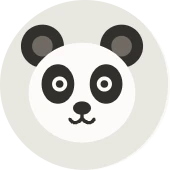
The screen never shows a surname, ID number, age or type of operation, and nothing is kept once a child is removed. The data is hosted in the European Union, in line with Uruguay's data protection law (Ley 18.331).
We took the foundation's problem to Streaver's hackathon in September, planned the answer as a team and built it, and by the end of the night it was real.
A week later we presented the proposal to the foundation, and they loved it.
The app is part of the foundation's larger project, the renovation of the waiting room, and will be switched on with it.
In October we showed the foundation the waiting room app again, and the animals won them over. In the same meeting they asked if we knew an app for a silent auction. Lucas and Rosi answered: we'll build it.
Every year, companies donate products and experiences to the foundation's annual dinner. Until now they were not auctioned: they were handed out to the guests as gifts. Only the paintings, a sculpture and the football shirts went under the hammer, live, with an auctioneer.
The silent auction let guests bid on those donated items from their own phones, during the dinner, while the live auction kept the paintings, the sculpture and the shirts.
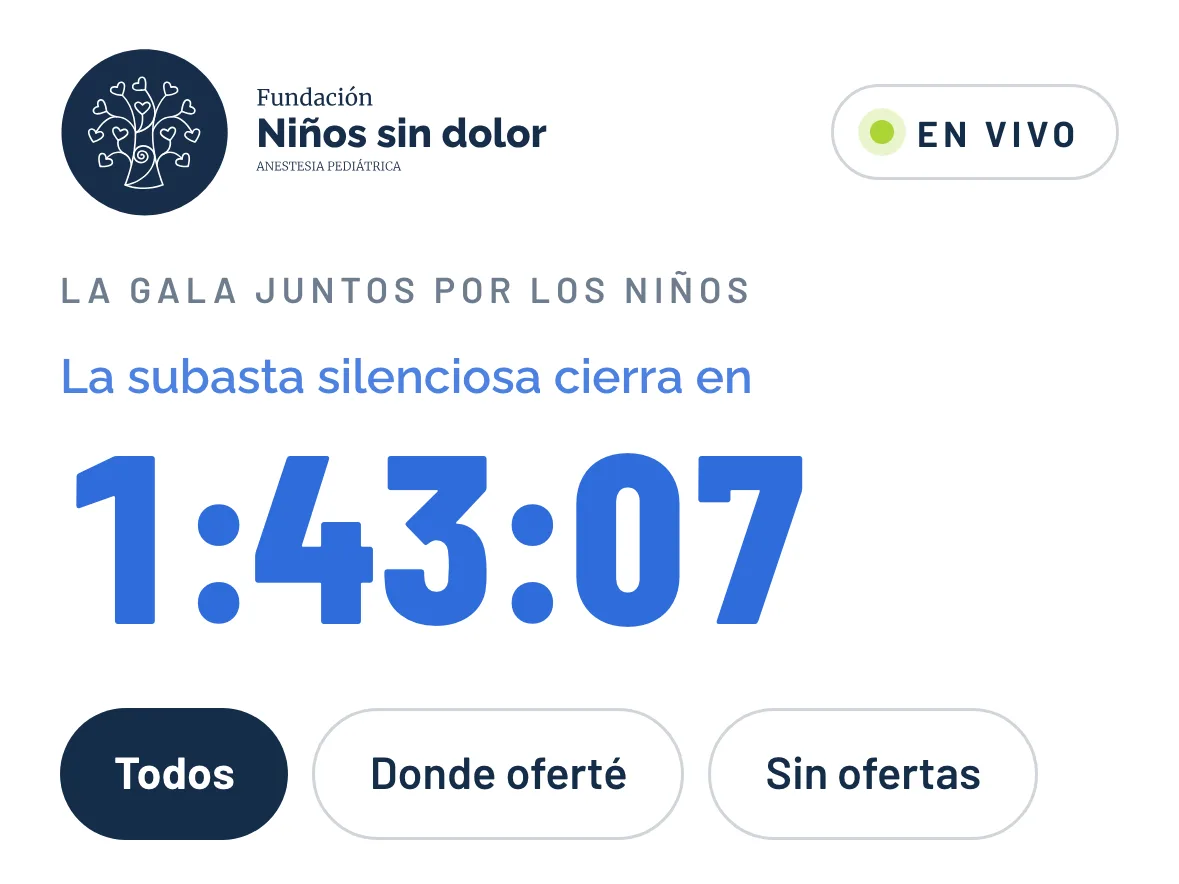
Every item with its photo, lot number, current bid, estimated value, donor and countdown. Guests sign up with their ID number, a six-digit PIN and an alias, pick a suggested amount or type their own, and confirm. Outbid? They hear about it right away, with the amount to lead again. Winners see “You won!” with their total.
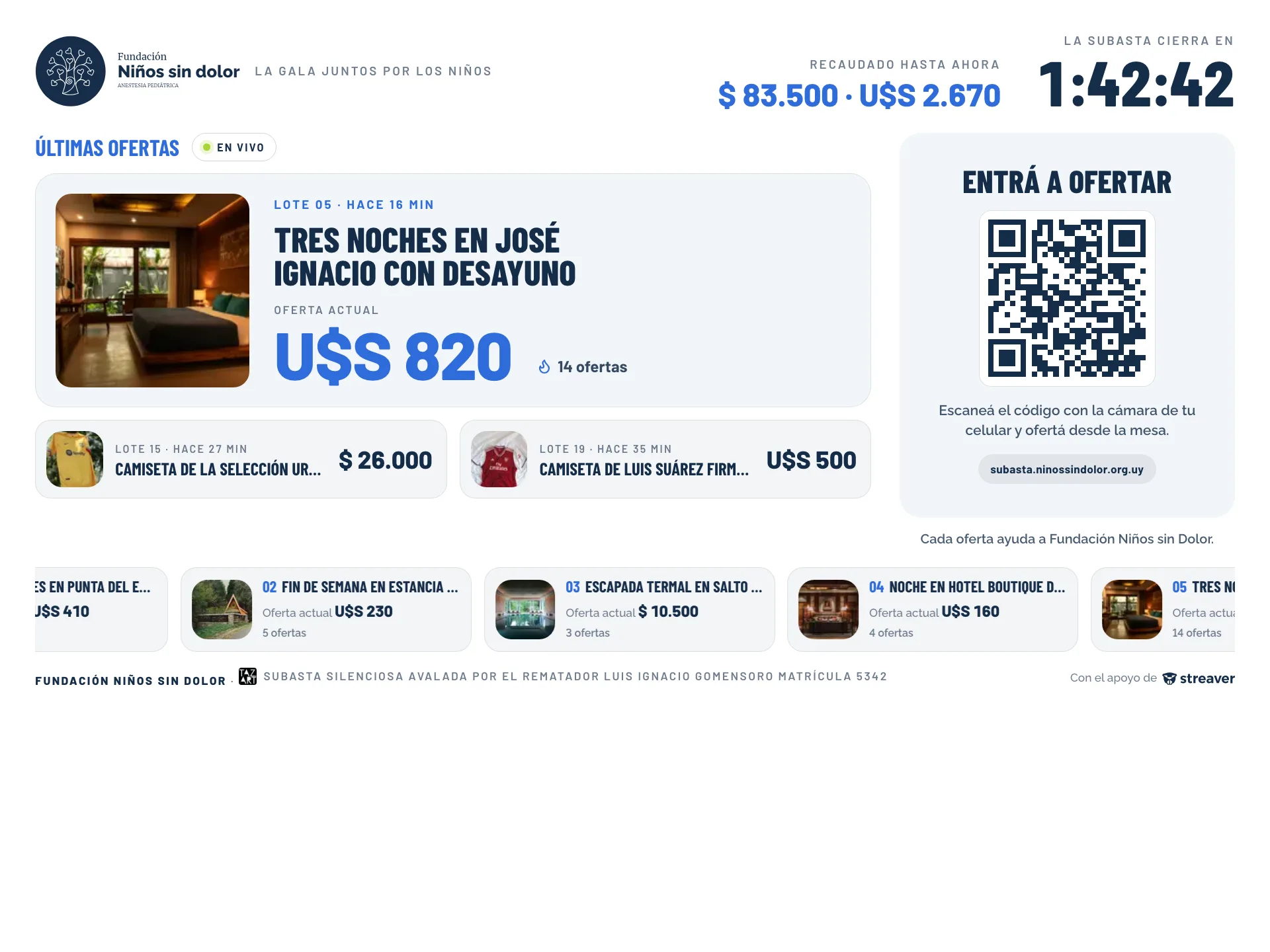
A countdown, the total raised, every lot's current bid with no names, the latest bids and a QR code to join. Each new bid takes over the whole screen with a QR code to that lot, so the tables can answer on the spot. At the close it shows the total, the winners and a QR code to the foundation's donations page.
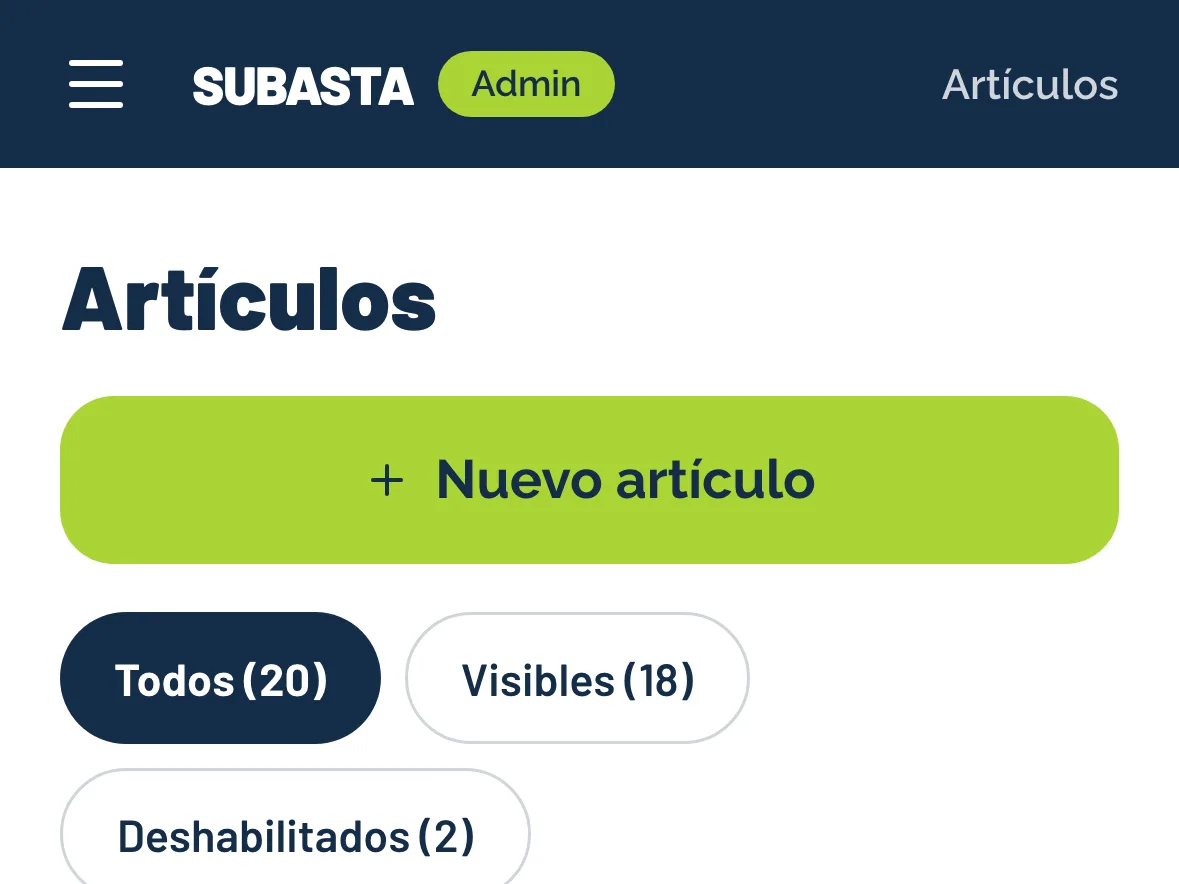
An admin panel made for the phone: lots, donors and estimated values, hidden items and blocked users. After the close, the foundation collects at the table against the list of winners and a spreadsheet.
Photos: Fundación Niños sin Dolor
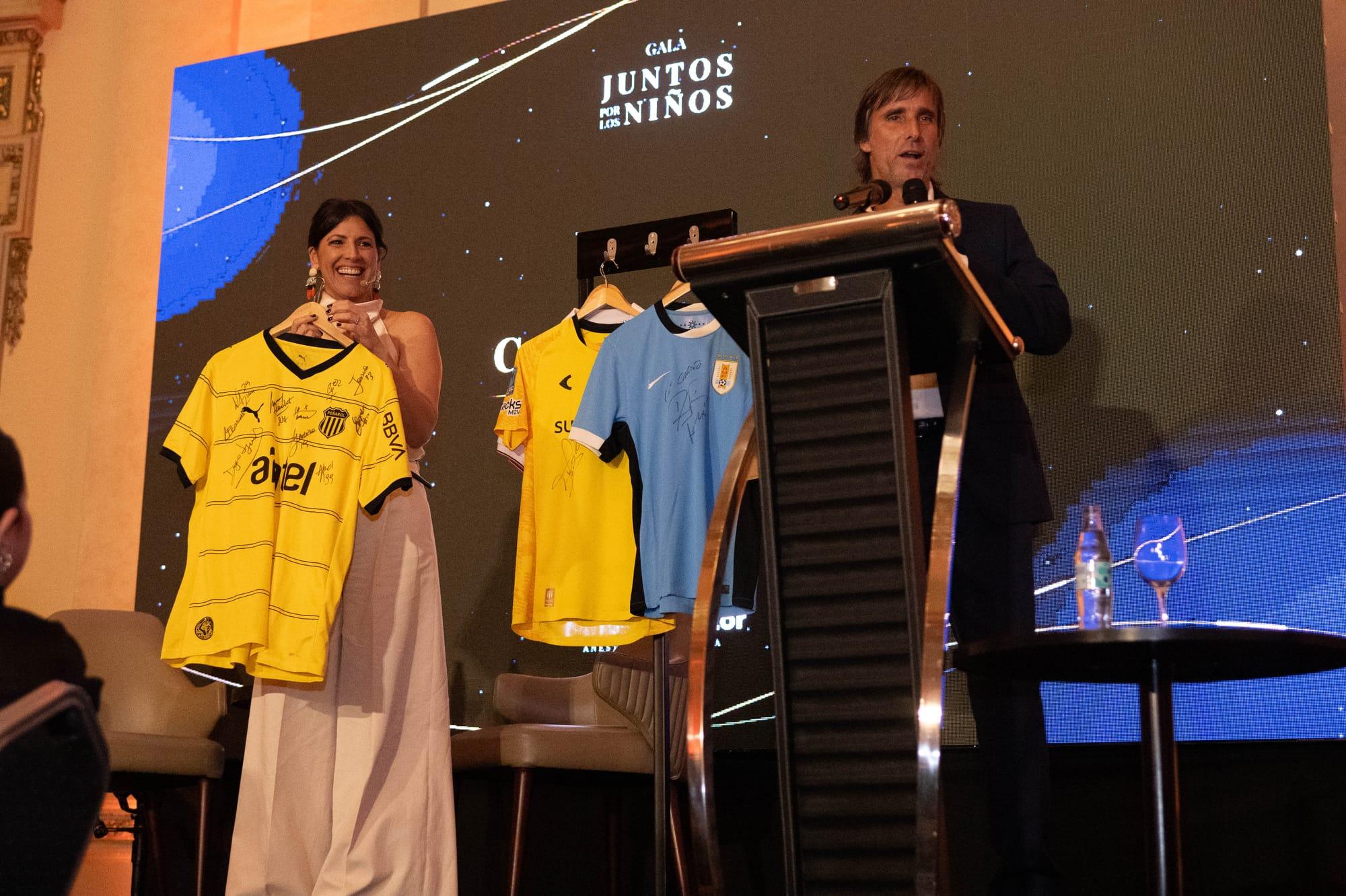
An auction is run by a licensed public auctioneer, so the silent one had one behind it too: Luis Ignacio Gomensoro (TAZ.ART, license 5342), whose name, logo and license number sit at the foot of every screen.
Sign-up, catalogue, bids, an admin panel, an operations guide and end-to-end tests.
A scheduled start, the room screen, and a load test with 300 phones bidding at once.
The public catalogue, the six-digit PIN, the results, the room screen and the brand.
52 test items, a feedback round across Streaver, and an admin panel for the phone.
The foundation's items, the auctioneer's backing and its own domain. On the 27th the auction opened to everyone.
The auction closes on the night of the dinner, and the winners' list follows the next morning.
Built on Streaver's own template with Claude Code, and covered by 231 unit test files and 17 end-to-end test files.
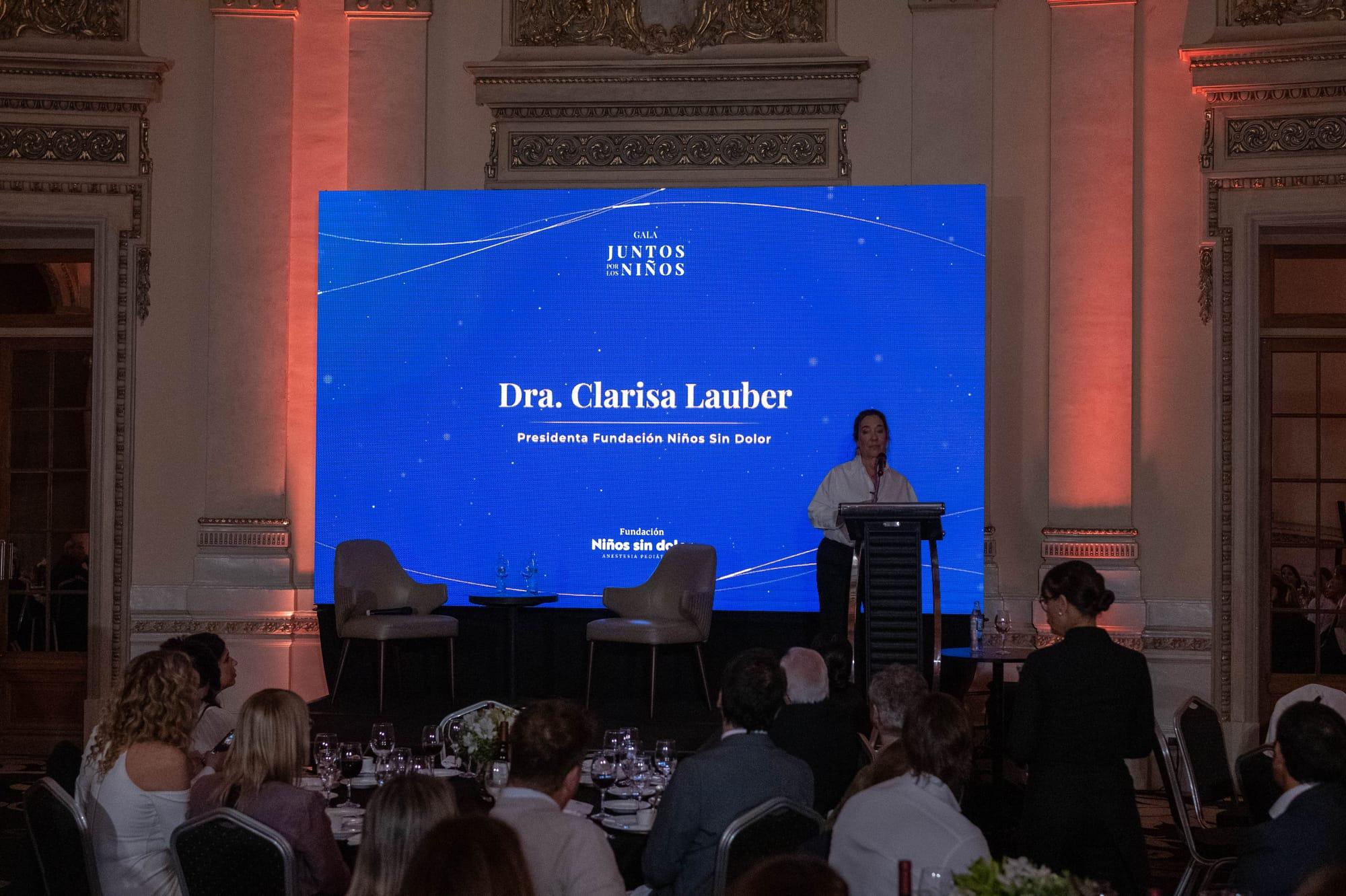
The silent auction closed on the night of the foundation's fifth annual dinner, Juntos por los Niños. The last bid came in at 10:38 pm.
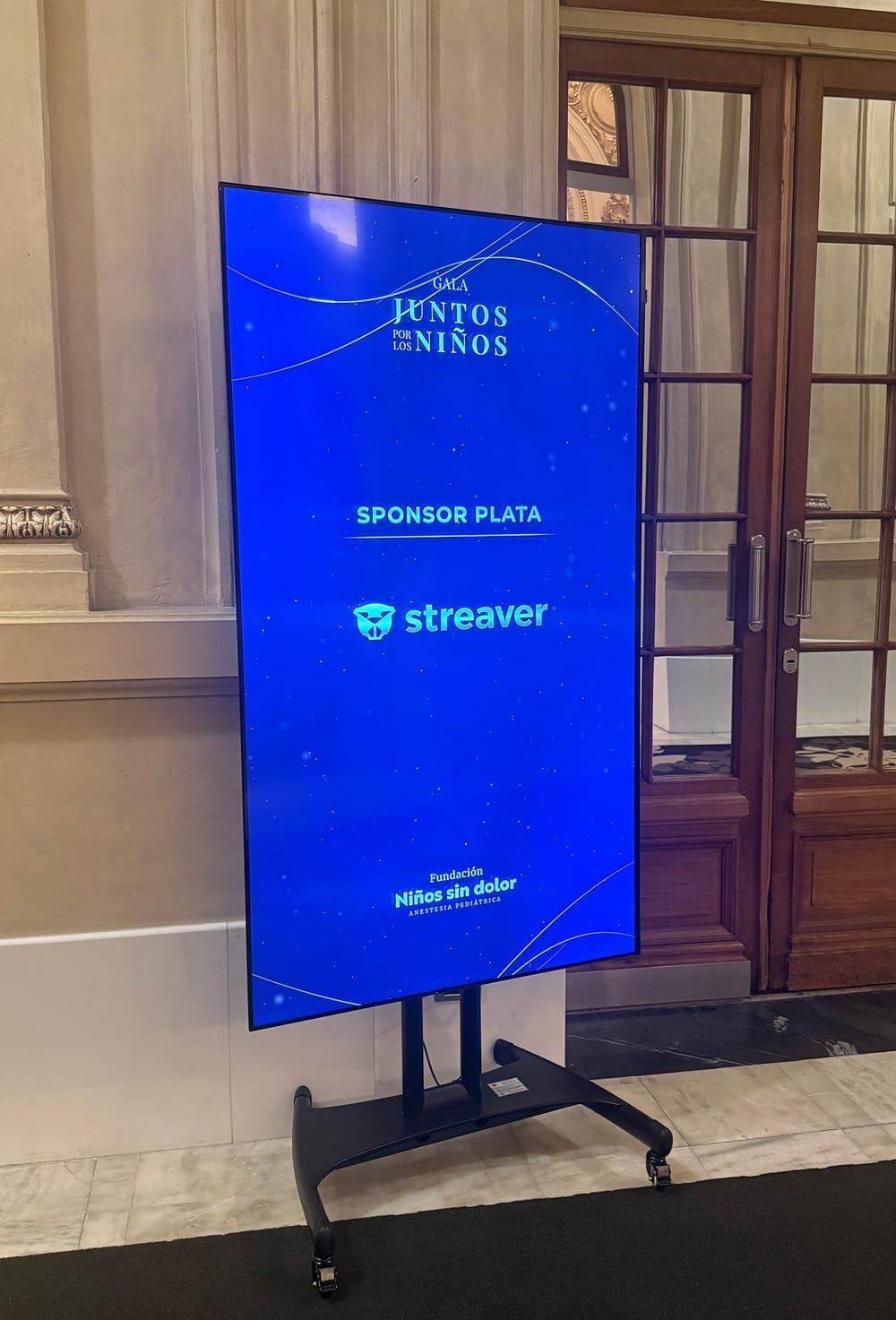
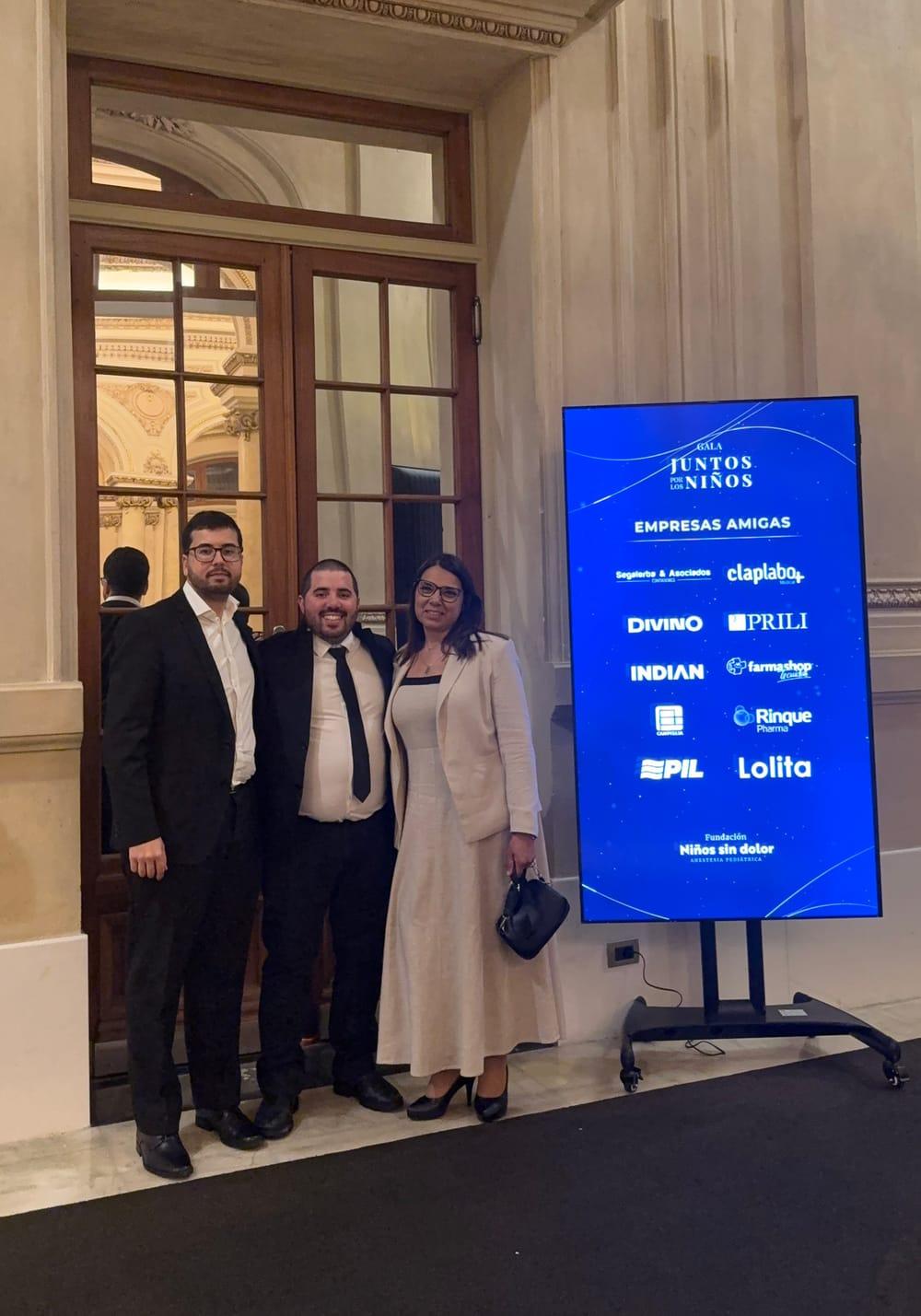
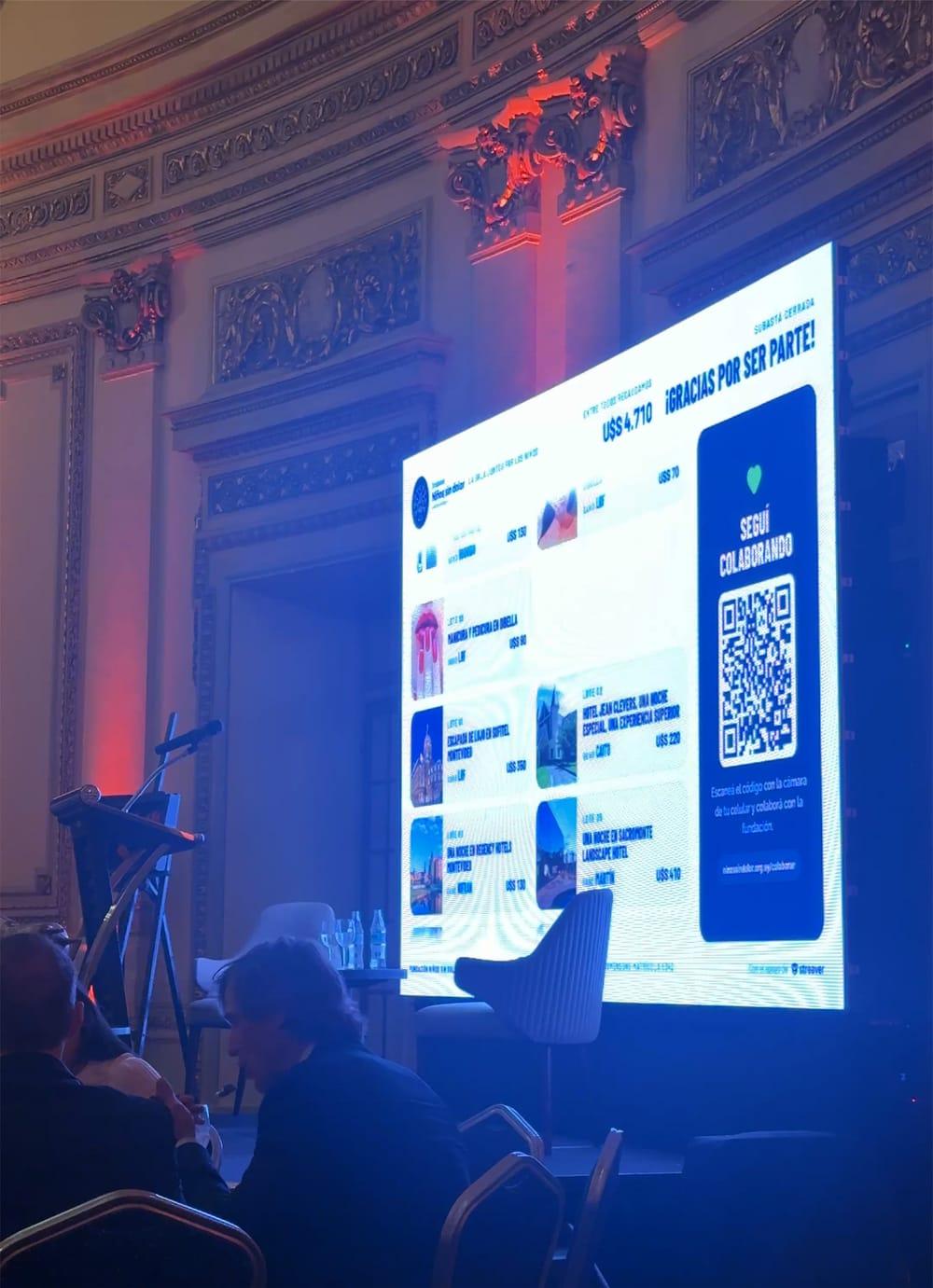
The foundation needed help with the gala’s branding, and there was one week to get it done. Our design and marketing team stepped in: the banner, a new look for the auction app, and 19 videos for the main screen, the totems, and the live auction. On the night, it all looked spectacular.
Without a doubt, the work Streaver does is excellent.
Not only technically, but on a human level. They designed and built several programs, among them an app to run a silent auction for Fundación Niños sin Dolor. They understood exactly what we asked for, and made sure everything worked well. We want to highlight their commitment, their creativity and their great willingness to find solutions. Thank you so much for standing by us and committing to our cause.
 Lucia Beneditto FrugoniFundación Niños sin Dolor
Twelve people across engineering, product, design and marketing, from the night of the hackathon to the night of the gala.
 Lucas RegaladoSsr. Software Developer
 Rosina VarelaPeople & Talent Manager
 Mateo SayasSr. Software Developer
 Anush AharonianSr. UX/UI Designer
 Samantha PirriMarketing Manager
Designed and built the silent auction end to end, from the first afternoon's version to the gala night. On the waiting room app, added the animal characters, the admin panel, the stages and the user manual.
570+ podcast episodes turned into instant, cited answers
Read the case study
Building a $1M product for $125K with a non-technical CEO at the keyboard
Read the case study
Five tools became one platform for an entire robotics ecosystem
Read the case studyFrom a question in a meeting to a live product in three weeks. 30 minutes with our CEO. No pitch. You’ll get an honest read on whether AI is the right move right now, what to build first, and what to wait on.
 Let’s talk with Larry