
Podcast
Swisspreneur
570+ podcast episodes turned into instant, cited answers
Read the case studyFirst, Streaver gave Wingtap back control of its own product. Then they came back to build 2.0 with us.

100% recommended, if you want a team that truly cares about your project!
The team members we work with genuinely do their best to support us, deliver high-quality work, pay attention to details, and make suggestions when needed. They share our vision and deliver accordingly.
Wingtap is a mobile-first platform for charitable giving: a marketplace that pairs donors with vetted nonprofits and the projects they're funding, built around simplicity, transparency, and trust. It lets people discover causes, give in a few taps, and track the impact of their generosity over time.
It's the work of two brothers: Nikita Ryjov in Zurich, who owns the business, fundraising, and growth, and Anton Ryjov in Geneva, who leads product and technical direction. Their north star is ambitious (reach a million donors), and they hold a clear principle: the app should feel alive even with only a handful of people in it.
Wingtap first came to Streaver in the wake of a hard partnership transition. Their entire product (repositories, hosting, the works) sat inside their former tech partner's proprietary environment. They didn't fully control their own software, and that dependency capped how fast and how far they could grow.
Streaver's first job wasn't features. It was freedom: a staged migration of the whole platform onto independent, industry-standard infrastructure with zero disruption to live users, then the modernization and stabilization needed to make it a foundation worth building on.
Repos, database, API, and assets moved to scalable AWS, incrementally, with minimal downtime.
Control of every system handed back to Wingtap, no more reliance on a proprietary stack.
AWS Cognito via CDK enabled Google and Facebook login and smoother registration.
Dependency audit, security fixes, and resolution of scroll, load, and receipt issues.
They took that foundation, validated it in the market over two years, then raised their first major round and came back.
The MVP did its job: people gave, and the model worked. But it was utilitarian: go in, donate, done. With funding in hand, Nikita and Anton wanted something bigger: to make Wingtap the place where a donor's generosity lives, the way Strava holds an athlete's identity or Spotify holds your music.
That meant re-centering the entire experience on the donor rather than the nonprofit: a living feed of projects and updates, visible and gamified contribution, and a social layer that lets people give together, all while still feeling alive at small scale. A rebuild, not a reskin.
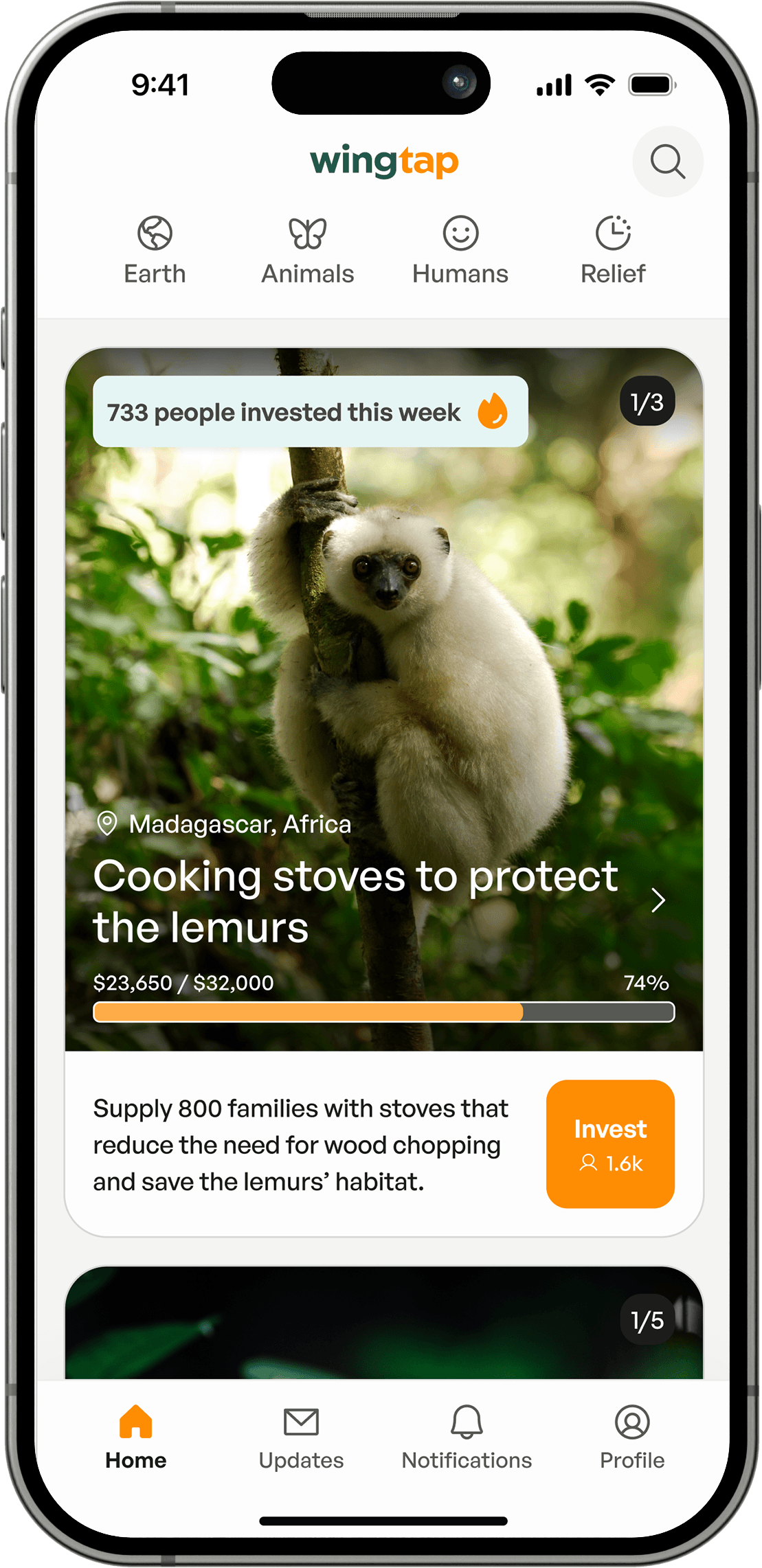
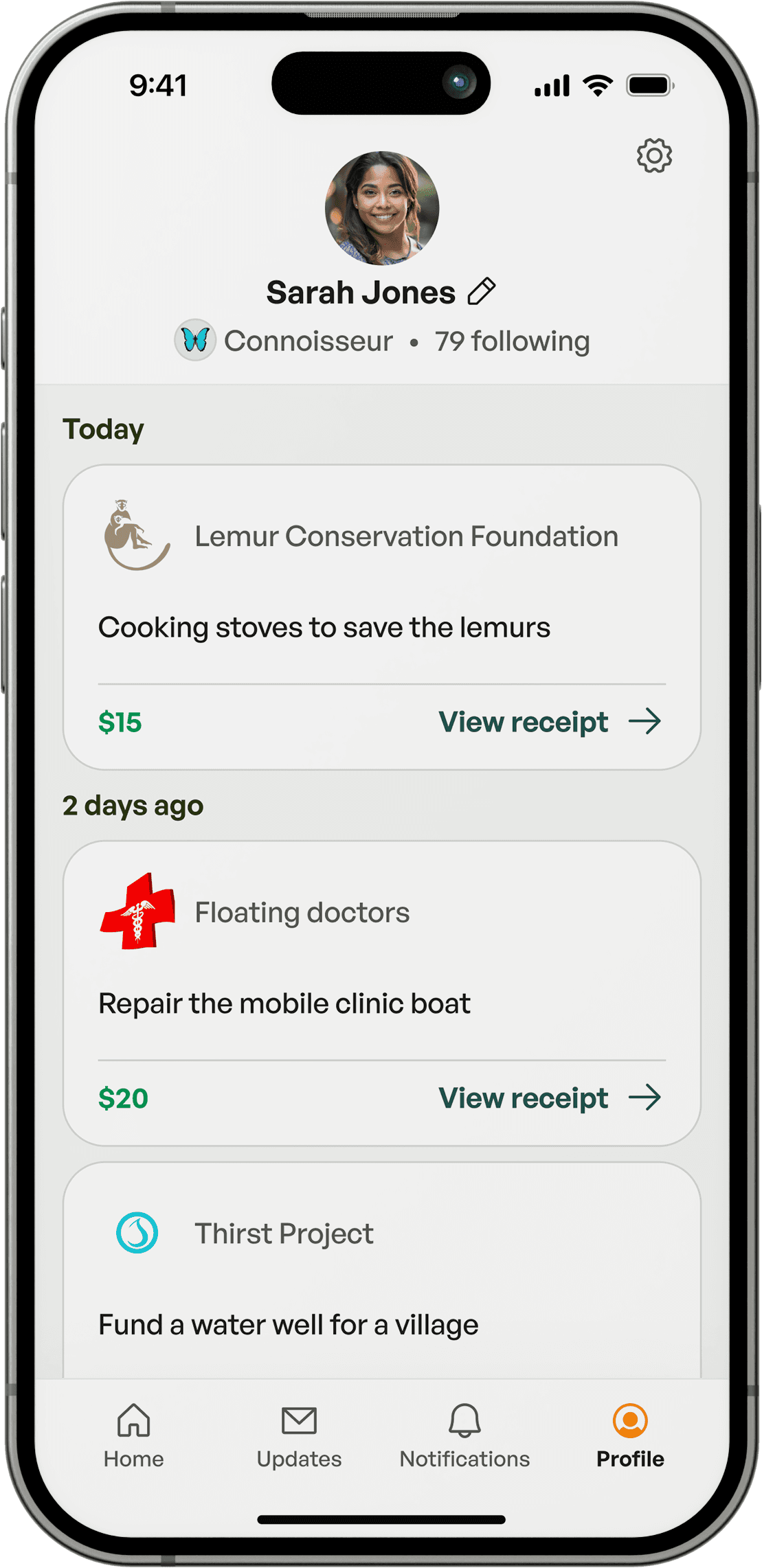
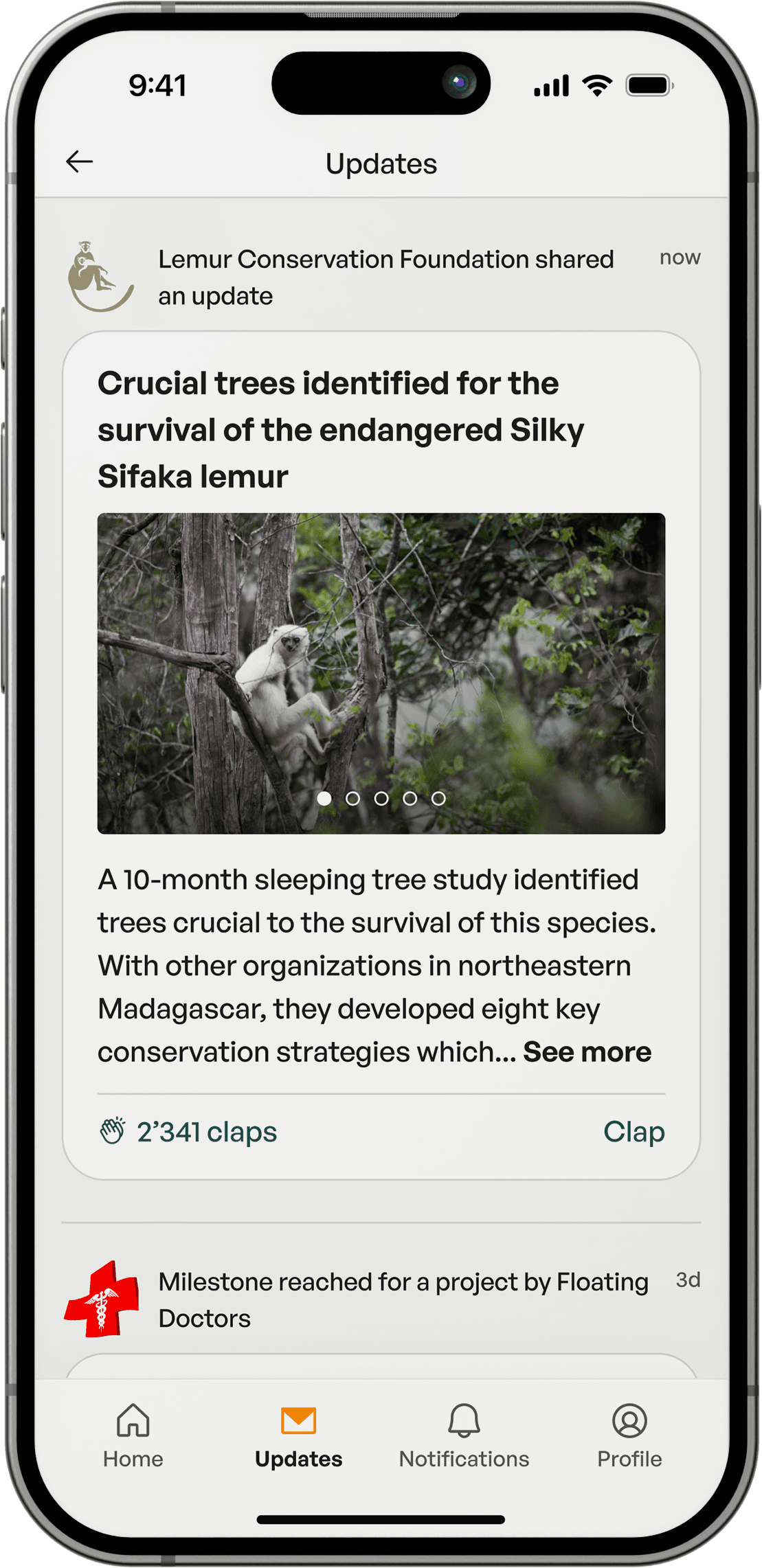
Streaver embedded a dedicated, AI-augmented pod alongside the founders (design first, then engineering) to deliver the 2.0 around four product pillars.
Projects, news, and nonprofit updates that feel ongoing, never static.
Donations surface across the app, with streaks and levels that reward giving.
Donors see each other's impact, nudge friends, and give together.
The experience feels populated even with only a handful of active users.
Strategy before code. Before committing a line, Streaver worked the founders through the platform's biggest open question: a web/PWA experience versus staying native. The recommendation and the trade-offs were laid out plainly; Wingtap chose native React Native for long-term scalability and App Store presence, with Streaver keeping a parallel path under evaluation as a comparison.
An AI-augmented build. The 2.0 runs on Streaver's agentic development workflow (tooling set up under Wingtap's own org so they own it), pairing a lean senior team with AI to move faster without losing the craft.
A senior product designer defining the 2.0 flows and visual direction in Figma.
A strategic analysis that framed the platform decision as a growth call, not just a tech one.
Home, Give flow, and a blended news/projects experience redesigned around the donor.
Leveling, streaks, tipping, and onboarding designed to bring people back.

We are happy to work with you. There's no question there.
The simplest proof of a partnership is a client who returns. Wingtap left their first vendor because they lost control of their own product. They returned to Streaver, after raising, because the opposite was true here: a team that handed them autonomy, told them the truth on hard calls, and treated their million-donor ambition as its own. The 2.0 is being built by an embedded pod that operates as an extension of the founding team.
Provided product and logical context to an expert development team for V2, drawing from V1 experience. Maintained strong client alignment and satisfaction throughout the lifecycle.
570+ podcast episodes turned into instant, cited answers
Read the case study
Building a $1M product for $125K with a non-technical CEO at the keyboard
Read the case study
Five tools became one platform for an entire robotics ecosystem
Read the case study
How a developer automated his daily planning with a scheduled AI agent: no code, just a document, a schedule and one prompt. Rules, examples and costs.
Devin will sell you an AI software engineer. Nobody mentions that you also just became its engineering manager. An honest comparison of buying the AI tool vs. renting the outcome — and which deal your company actually needs.

We moved our dev-workspace setup off manual steps and onto two scripts our tooling runs on create and archive. The deciding factor wasn't the time saved; it was that disposable, collision-proof workspaces are the only thing that survives multiple coding agents working in parallel.
Streaver runs staged migrations of live production systems onto accounts you actually own, then partners on the rebuild that follows. Foundation, then ambition.
 Let’s talk with Larry